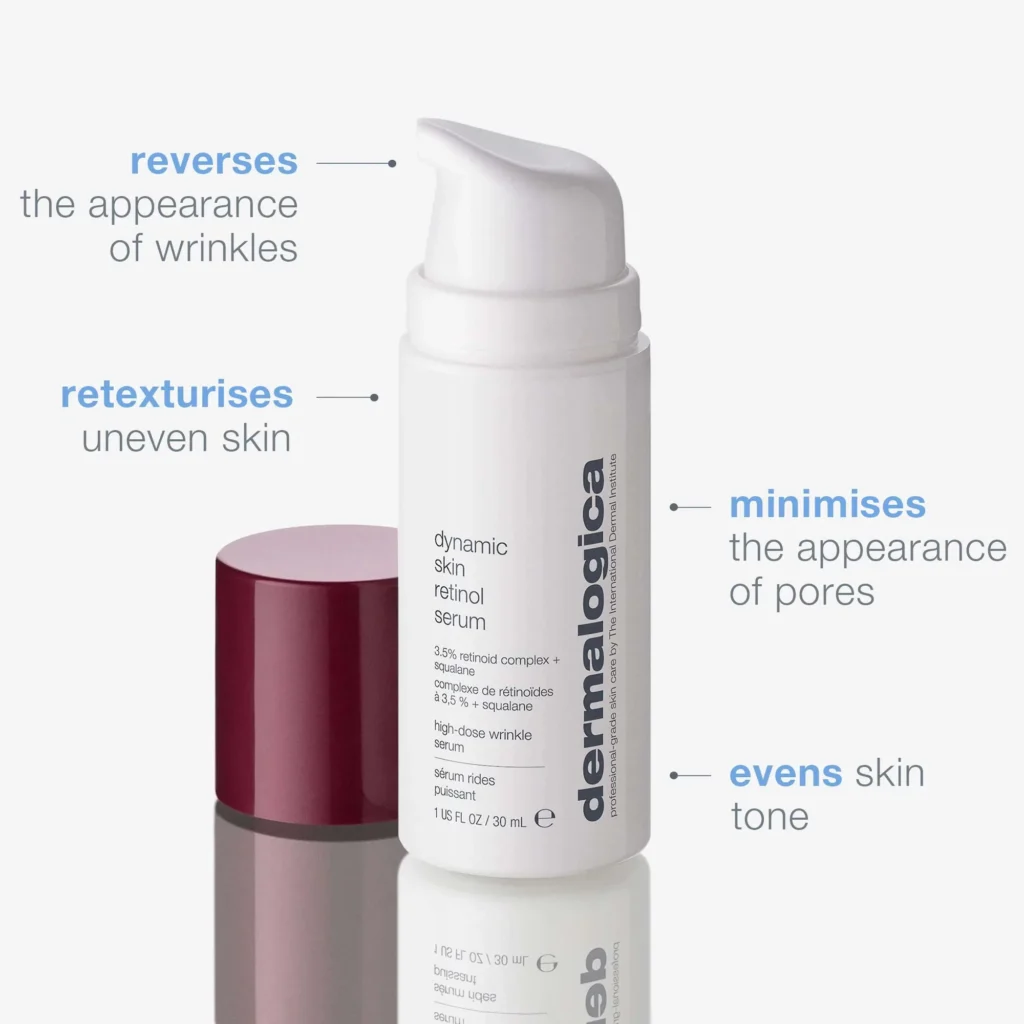
DYNAMIC SKIN RETINOL SERUM
easily reduces the
4 signs of skin aging within 2 weeks
Retinol – it’s the gold standard for visibly reversing signs of skin aging like fine lines and wrinkles, uneven skin tone and texture, and enlarged pores. But Retinol can be intimidating; some serums fail to provide visible results while others are too harsh – causing sensitivity or dry, flaky skin.
Retinol the Dermalogica way takes a skin health-first approach to transforming the look of skin, for real results made easy with no compromise to the barrier. Dynamic Skin Retinol Serum features a fast-acting 3.5% retinoid complex that addresses the four signs of skin aging: helping to reduce the appearance of wrinkles, retexturize skin, minimize the appearance of pores, and even skin tone.
The science behind skin ageing
Throughout the course of our lives, there are three main factors that influence the ageing process: genetics, exposome, and metabolic processes.
• Genetics – genes determine when our cell renewal process slows down, causing signs of skin ageing. Genes drive the response to two key factors: the passage of time and an individual’s environment, including the self-created “micro- environment” (lifestyle choices, habits).
• Exposome – the theory of “Damage Accumulation” states that ageing can be explained by an accumulation of cellular damage or alterations to proteins, lipids, DNA, and other biomolecules that the organism cannot eliminate or repair. Many of these changes or attacks come from the environment.
• Metabolic processes – our body is constantly bombarded by free radicals (ROS), leading to oxidative stress. When we are young, our natural systems can fight off the threat of oxidative stress but as we age, our defense mechanisms become weaker – causing ageing and disease. By the same token, our body’s ability to control MMP activity declines and there is an increase in Matrix Metalloproteinase Enzymes (MMPs) that degrade collagen and elastin. Because they inhibit biosynthesis of new collagen, we see a net degradation of our dermis, which accounts for many of the signs of skin ageing. High levels of sugary foods can lead to the formation of Advanced Glycation End Products (AGEs), which also contribute toward accelerating the skin ageing process.
These factors all contribute to the ageing process, the epidermis thins while the stratum corneum thickens, causing: fine lines and wrinkles, rough texture, enlarged pores, and uneven skin tone
1. fine lines and wrinkles: just below the epidermis and above the dermis is a region called “Dermal Epidermal Junction” (DEJ). The DEJ region has finger-like projections of the epidermis and dermis interlocking with each other, much like a zipper. These projections are called “rete pegs” or “rete ridges”. These are important because capillaries branch out in the dermal pegs bringing nutrients and oxygen to the Stratum Basale layer. This is critical for cell division, which is key for this epidermal layer.
Overtime, rete ridges begin to flatten out, resulting in a slowdown of cell production in the stratum basal layer of the epidermis leading to increased fragility and less nutrient transfer from the dermis to the epidermis. This impacts the rate of cell division and is thought to account for the “thinning” of the epidermis. The dermis also thins as we age, and cells lose their structure and form. Tissue becomes “avascular” in appearance, which causes a noticeable loss of capillary loops that carry oxygenated blood and nutrients to the cells.
Additionally, ageing causes a decrease in the number and activity of fibroblast cells. After 30 years of age, collagen decreases 1% per year, types of collagen change (types I & IV decrease), and fiber breakdown lead to the appearance of fine lines and wrinkles.
2. rough texture: as we age, there are many noticeable differences in our skin, which can be attributed to a decreased rate of cell renewal and cell turnover. Cell renewal is the rate at which the stem cells, located in the Stratum Basale, divide. Cell turnover is the rate at which the cells migrate outward and hang out as a Stratum Corneum cell; accounting for the excess buildup of cells on the skin and the dull, muddy, dry appearance often associated with mature skin.
3. enlarged pores: new research shows that the look of pores can change, appearing more enlarged and noticeable with age. Using a K-means clustering algorithm, the pores on our skin can be classified into different groups depending on size, density, and elongation. The conditions of these classifications are correlated with skin ageing. Pores become larger and longer with age, due to loss of elasticity. This phenomenon strongly suggests pores are a characteristic of skin ageing. Retinol serums help regulate cellular function and keep skin clean and clear, which can help minimize the appearance of enlarged pores.
4. uneven skin tone: age spots and uneven skin tone are owed to a change in melanocyte activity caused by overexposure to UV rays and the ageing process. Due to a localized proliferation of melanocytes, dark spots tend to form on the face and hands. Underneath this pigmentation the rete ridge is very elongated or flattened with noticeable excess pigmentation in the basal layer

Retinoids: the one-stop solution
Retinoids help regulate cell turnover and collagen production, which support healthy-looking skin with less noticeable pigmentation concerns, such a sunspots or post-inflammatory hyperpigmentation.
Our skin naturally produces a retinoid compound known as Retinoic Acid, which strongly influences epithelial differentiation and proliferation. Retinoic Acid contributes to a normalized rate of cell turnover and desquamation, decreasing the build-up of dead cells on the surface of the stratum corneum which causes rough skin texture.
Retinol serums are on the rise as an alternative to prescription retinoids. Once the body converts them to Retinoic Acid, it can reap all the benefits:
why retinoids?
Retinol is a retinoid, which is an umbrella term for the entire family of Vitamin A derivatives – which ranges from relatively gentle over-the-counter products to potent prescription treatments. Retinoids come in many forms (Retinyl Ester, Retinol, Retinaldehyde, Retinoic Ester, and Retinoic Acid). Regardless of which one you use, it’s important to note that the skin converts all retinoids into Retinoic Acid. The more closely related a Retinoid is to Retinoic Acid, the more quickly your skin will utilize it.

Dermalogica has developed a high-dose, fast-acting serum with multi-retinoid and booster technology that reverses the appearance of wrinkles, retexturizes and evens skin tone, and reduces the appearance of enlarged pores.
This serum contains a unique complex of retinoids that act at different speeds to reduce the common signs of skin ageing combined with potent moisturizers and calming blends to minimize skin irritation and nourish the skin for a stronger barrier.
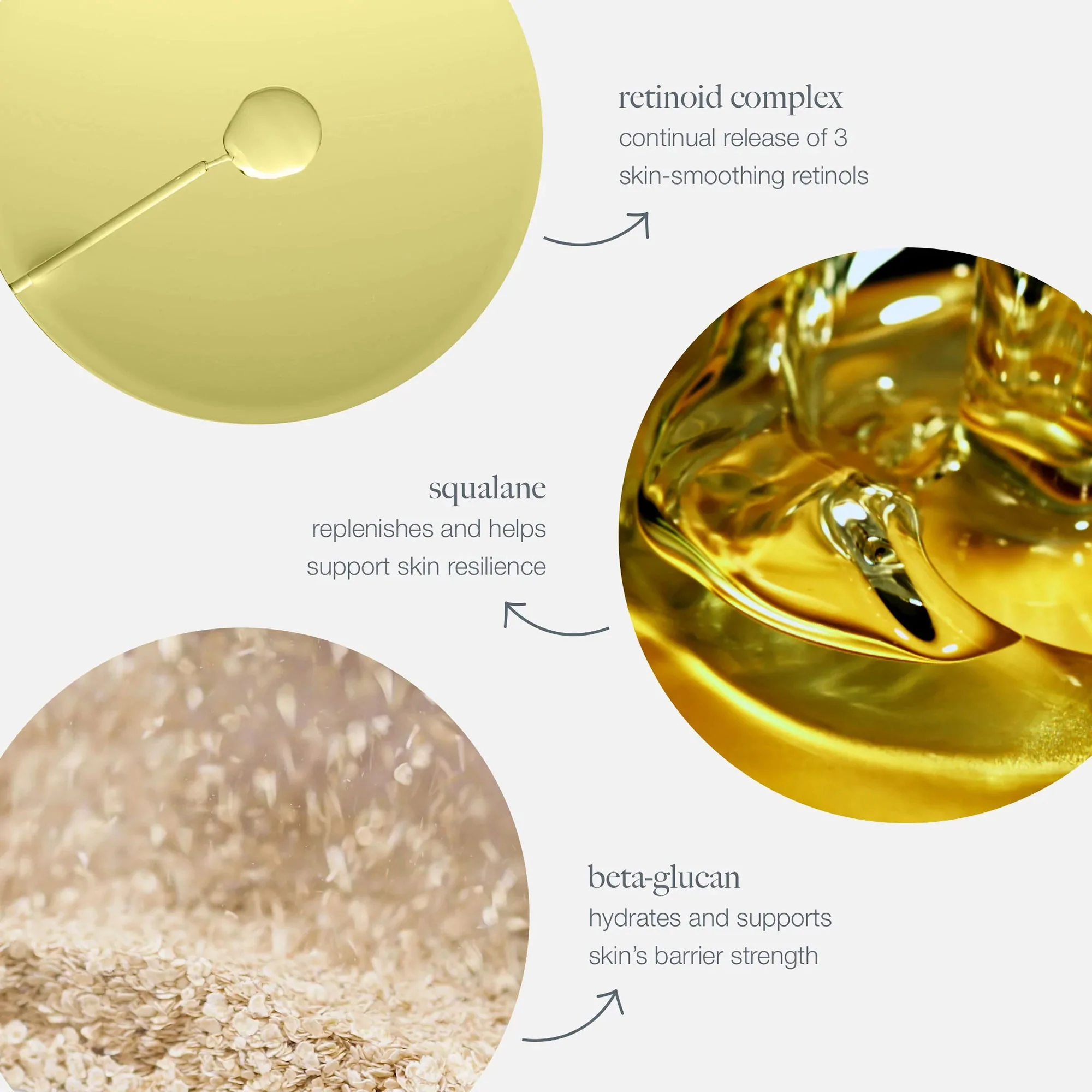
This formula is comprised of a 3.5% retinoid complex, including:
• Retinol is a derivative of Vitamin A that is well-documented for its efficacy in improving skin texture, the appearance of fine lines, wrinkles and age spots.
• Encapsulated Retinol spheres consist of encapsulated Retinol that forms a uniform and thin film on skin’s surface and deliver Retinol gradually to improve skin texture, reduce fine lines and wrinkles, and minimize the appearance of dark spots. This film also promotes hydration by the reduction of water evaporation.
• Granactive Retinoid (Hydroxypinacolone Retinoate) consists of a powerful retinoid ester with fast action that reduces common signs of skin ageing (including fine lines and wrinkles, uneven skin tone and texture, and enlarged pores) while also having increased stability and less irritation.
• 10 HSA (Hydroxystearic Acid) is a potent Retinol booster that helps Retinol’s ability to improve the appearance of fine lines and wrinkles.
