Home > Advice > Skin Concerns > Pigmentation
PIGMENTATION
Skin colour or pigmentation, can be constitutive , facultative or a combination of both.
Constitutive –
This is skin colour that is inherited and has no direct effect on the Sun or hormonal interaction. It is the colour of our skin that we are born with before we were exposed to UV rays.
Facultative –
This is the result of our environment often referred to as hyperpigmentation and is mainly caused from tanning. When a darker skin suffers any form of trauma the healing process includes the stimulation of melanin forming cells creating dark spots known as hyper pigmentation. This may also result in less pigment forming or the creation of white spots known as hypopigmentation.
Trauma can be anything from UV exposure, acne and wounds, reactions to medication including antibiotics and the contraceptive pill.
The darker the skin the more likely it is to over produce pigment.
What can trigger pigmentation
Stress and hormones – long-term stress will cause hormone to be released that stimulate pigmentation. Pregnancy, contraceptive pill, HRT and even a natural form of evening primrose can stimulate pigmentation. Genetics – freckles.
Sun exposure – not using a correct SPF to protect the skin.
Ageing – damage cells.
External or environmental factors – pollution, Perfume.
Medications – contraception, antibiotics even anti-malaria medication can stimulate pigmentation.
Skin diseases and disorders – when they causes inflammation.
Inflammation due to trauma – breakouts, scaring.
Different forms of hyperpigmentation
Sun exposed skin –
UV exposure is the key trigger for pigmentation. Years of UV exposure will damage the Melanacyte cells that produce the melanin then this will cause erratic behaviour. Over production of melanin can flood into the dermis where it stays permanently and it’s very difficult to treat.
Lentigines –
These are known as age spots or liver spots. They are patches of pigmentation that are due to sun exposure commonly found on the face of hands and forearms. These will not fade in winter and a very different to treat. They commonly appear with ageing.
Melasma –
Known as the pregnancy mask. This can occur in pregnancy or whilst taking a prescribed hormonal contraception or with hormone replacement therapy. This commonly found in women with dark skin colour. Once the hormones have stopped it will fade but will never will subside completely.
Post inflammatory hyperpigmentation –
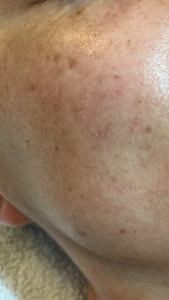
This is the result of trauma to the skin for example with acne scars you can get a ready pigmentation as well as brown. Scar tissue can darken once it has healed.
A few tips to prevent pigmentation
Always wear a good SPF, nothing less than a SPF15. Reapply if enduring long periods of sun exposure.
PREVENTION IS EASIER THAN CURE!