Home > Advice > Skin Concerns > IPL Laser Pigmentation Treatment
We know that when your skin is repeatedly exposed to UV light, sun damage occurs. Brown spots and uneven skin tone develop as a result of too much melanin being produced to help protect your skin from UV light. Melanin acts like an umbrella to try and protect your skin cells.
With age and other tiggers our Melanocytes which produce our melanin can malfunction and over produce melanin. This then floods pigment deeper in to our skin in the Dermis where are skin cells grow creating hyperpigmentation.
The more sun exposure the more pigment will be released and darker the patches will get.
Brown spots can influence how old we look and can be unsightly and distressing.
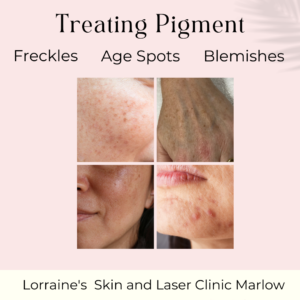
Freckles are small brown spots on your skin, often in areas that get sun exposure. In most cases, freckles are harmless.
Genes also play a big part in who gets freckles.They form as a result of overproduction of melanin, which is responsible for skin and hair color (pigmentation).
Overall, freckles come from ultraviolet (UV) radiation stimulation.
The more time you spend in the sun, the more melanin is produced, which can lead to more freckles being produced. The more sun exposure, the darker the freckles can get.
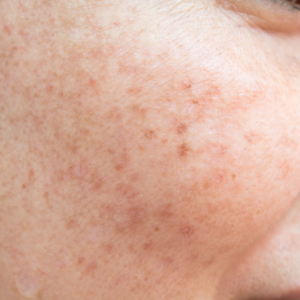
Freckles often fade or even disappear with age, especially if they are protected from the sunlight.
Freckles can be treated with IPL laser to remove them.
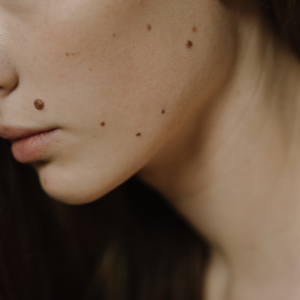
Moles are not the same as freckles. They are still skin lesions but are often darker and not necessarily associated with sun exposure
MELANOGENE – This is the complex process which is responsible for the production of pigment called melanin. This pigment determines our skin, hair and eye colour that we are born with.
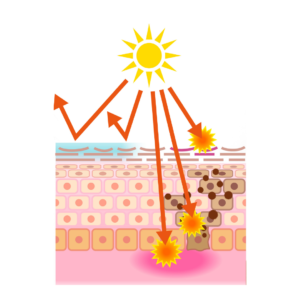
MELANOCYTES – These are specialised cells in our skin that produce melanin. When our skin is exposed to UV radiation these cells kick in and produce melanin to protect us from sun damage and sun burn, creating a suntan.
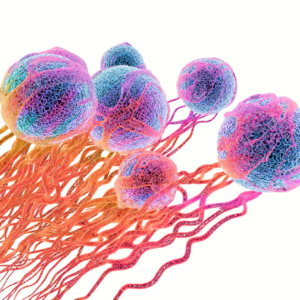
LANGERHANS CELLS – When we scratch or injure our skin it can lead to hyper pigmentation. The injury triggers Langerhan cells to repair our skin. Melanocytes and Langerhan are sister cells, making them work together and therefore producing melanin to repair the skin.
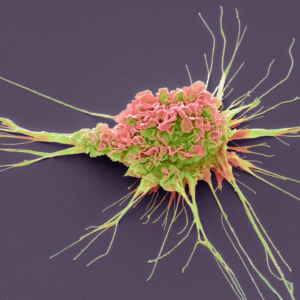
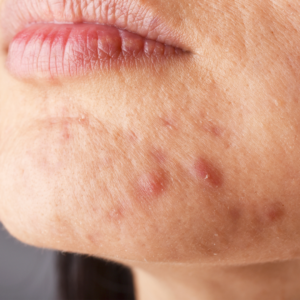
POST INFLAMMATORY HYPER PIGMENTATION – When we experience a breakout it can lead to hyper pigmentation. This is because the skin will react to the inflammation like it would a small injury.
MELASMA – This is when our hormones can cause over production of pigment creating dark areas of skin. This can be a common side effect of pregnancy and certain medications such as the contraceptive pill.
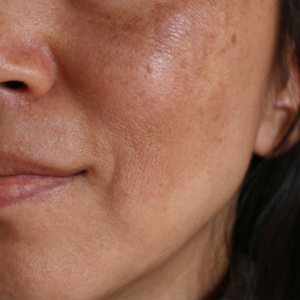
THE ENVIROMENT – The suns rays can stimulate pigment. Pollution levels can irritate the skin leading to pigmentation.
PIGMENTATION THAT CAN BE TREATED WITH IPL
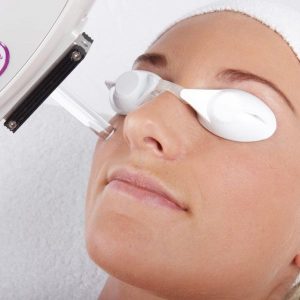
Pigmented lesions such as sun spots and freckles can be successfully removed creating a more flawless, youthful and glowing appearance.
Most people are suitable for treatment except for very dark skinned or tanned individuals. However, large, dark, mottled or raised pigmentation cannot be treated and may need to be checked by a dermatologist. Large, dark moles should not be treated, nor should lesions covering a large part of the body. The pigmented marks that respond the best are superficial lesions such as those caused by sun damage (sun spots) and freckles.
How does pigmentation removal work?
Short pulses of light are released and are readily absorbed by the high concentration of melanin found within pigmented lesions.
The rapid absorption of light energy heats the melanin and causes the destruction of the melanin-rich cells.
This triggers the body’s natural healing process to stimulate the growth of new, healthy skin tissue.
What does a laser treatment feel like?
Most patients describe the discomfort as mild and tolerable and no anaesthesia is required.
How many sessions will I need?
The number of sessions will depend on the type and size of the pigmented lesion, but typically a minimum of 3 and up to 6 sessions are recommended.
Treatments are carried out every 4 to 6 weeks. Following your course of treatments, top-up sessions are performed as required,
usually once or twice a year.
Who is suitable for treatment?
Most people are suitable for treatment. We recommend a consultation to ascertain if the treatment will be
successful for you.
Large, dark, mottled or raised pigmentation cannot be treated and may need to be checked
by a dermatologist.
Large, dark moles should not be treated, nor should lesions covering a large part of the body. The pigmented marks that respond the best are superficial lesions such as those caused by sun damage (sun spots, age spots) and freckles.
For information on prices click here.