

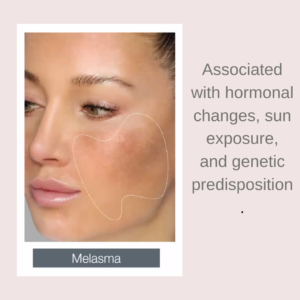
Melasma is a common skin condition characterized by patches of hyperpigmentation, typically on the face. It often appears as brown or gray-brown patches, primarily on the cheeks, forehead, chin, and upper lip. Melasma is more prevalent in women and is associated with hormonal changes, sun exposure, and genetic predisposition. While it doesn’t cause any physical discomfort, it can affect one’s self-esteem. Treatment options include topical lightening products, chemical peels. Unfortunately IPL Laser is not effective on Melasma and can worsen the condition. Remember results can vary, and recurrence is possible, especially with sun exposure.
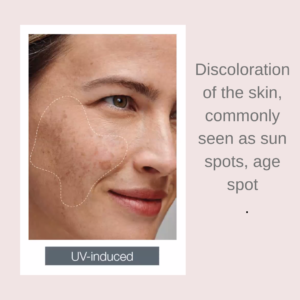
UV-induced pigmentation, also known as sun-induced pigmentation or hyperpigmentation, occurs when the skin produces excess melanin in response to exposure to ultraviolet (UV) radiation from the sun. This can lead to darkening or discoloration of the skin, commonly seen as sun spots, age spots, or freckles. UV-induced pigmentation can result from acute sun exposure or prolonged sun exposure over time, and it often appears on areas of the skin that are frequently exposed to the sun, such as the face, hands, and décolletage. This is often more common with ageing and menopause in women. IPL laser is very effective and gets great results. A course of chemical peels will help fade this pigmentation and can be done between IPL treatments to increase results. The use of quality topical lightening products can be very effective. Protecting the skin from UV radiation with sunscreen and seeking shade can help prevent UV-induced pigmentation and maintain a more even skin tone whilst stopping reoccurrence after treatments.
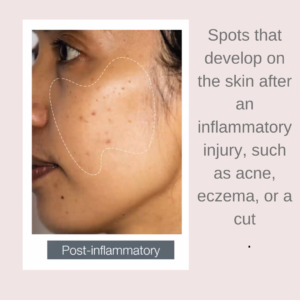
Post-inflammatory pigmentation refers to darkened patches or spots that develop on the skin after an inflammatory injury, such as acne, eczema, or a cut. These patches occur due to an overproduction of melanin, the pigment responsible for skin color. Post-inflammatory pigmentation can vary in color from pink to red, brown, or even black, depending on the skin tone and severity of the inflammation. While it’s not harmful, it can be bothersome cosmetically. Treatment options may include topical creams, chemical peels, laser therapy, nano infusion or microneedling, depending on the individual’s skin type and the severity of the pigmentation. A skin consultation can help determine the best course of action for managing post-inflammatory pigmentation.
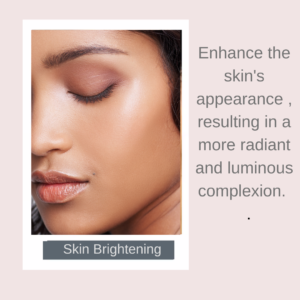
Brightening treatments aim to enhance the skin’s appearance by reducing hyperpigmentation, dark spots, and uneven tone, resulting in a more radiant and luminous complexion. These treatments often involve the use of ingredients like vitamin C, niacinamide, and alpha hydroxy acids to promote skin cell turnover and inhibit melanin production. By addressing dullness and discoloration, brightening treatments help create a more vibrant and glowing complexion, boosting overall skin luminosity for a youthful and refreshed look. Treatments that are great for brightening the skin include, chemical peels, nano infusion, luminfusion and even microneedling.